

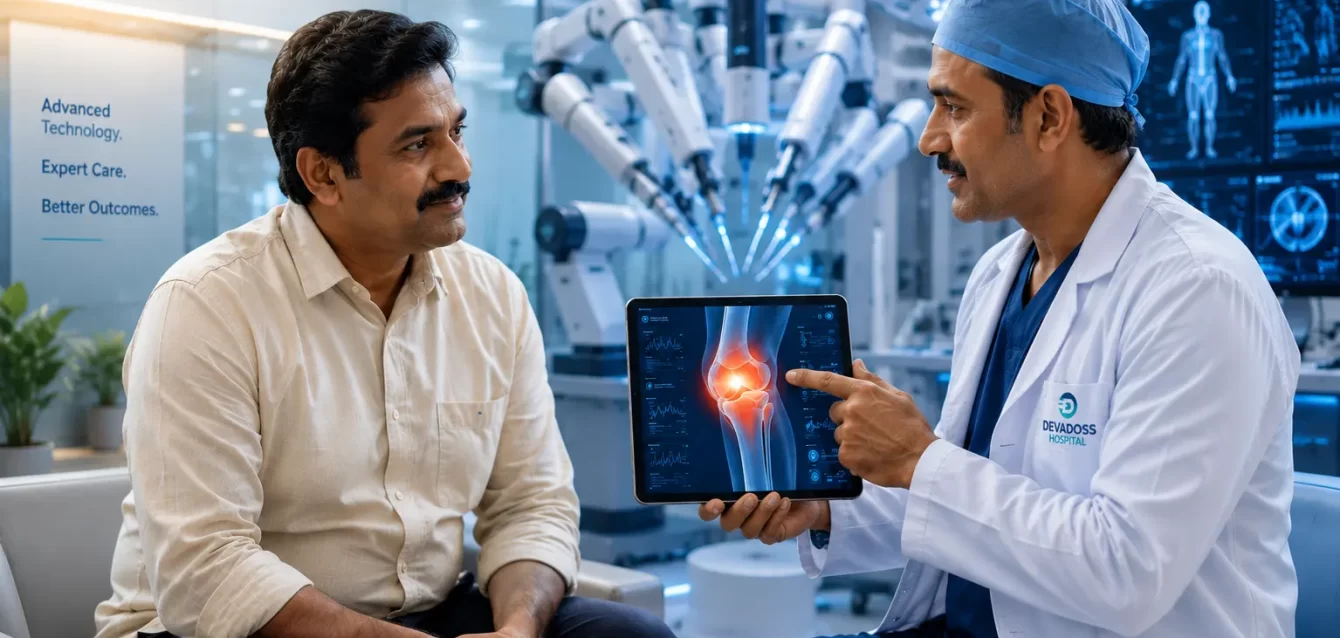
Robotic-assisted surgery is transforming modern general surgery by improving precision, reducing recovery time, and minimising surgical trauma for patients. Instead of long hospital stays, larger scars, and painful recovery, many patients today experience faster healing, less discomfort, and better surgical outcomes through advanced robotic procedures.
At Devadoss Hospital, the robotic surgery approach is helping redefine general surgery in Madurai by making treatment not only more accurate but also safer, smoother, and less stressful for patients and their families.
What is robotic surgery?
Robotic Surgery refers to an advanced form of minimally invasive surgery where the surgeon performs the procedure using robotic-assisted technology for better precision, flexibility, and control. The robot does not perform the surgery on its own. The surgeon remains fully in control at every stage, guiding robotic instruments that allow smaller movements, clearer visualisation, and improved accuracy, especially during complex procedures involving the abdomen, pelvis, and colorectal regions.
This helps reduce surgical trauma, minimise pain, shorten hospital stay, and support faster recovery for patients. This is why many patients today consider us for Robotic Surgery in Madurai as a preferred option before planning treatment.
Here are 10 ways robotic surgery is changing general surgery today.
1. Smaller Cuts, Smaller Scars
Traditional surgery often requires larger incisions to reach the affected area. Robotic procedures use much smaller openings, which means less visible scarring and faster healing. Patients recover with less physical strain and often feel more confident during the healing process.
2. Better Precision During Surgery
Robotic systems allow surgeons to perform highly refined movements that are difficult to achieve by hand alone. This becomes especially valuable during delicate procedures where even small accuracy differences can improve outcomes. During hernia and colorectal procedures, robotic instruments help surgeons operate within narrow spaces with improved wrist-like movement and better control, supporting safer and more precise surgical outcomes.
3. Less Blood Loss
Because the surgical movement is more controlled and targeted, surrounding tissues are disturbed less. This often reduces blood loss during surgery and helps make treatment safer for patients across different age groups.
4. Reduced Pain After Surgery
Smaller cuts usually mean less pain after surgery. Many patients need fewer pain medications and are able to move comfortably much earlier than expected, which improves both physical and emotional recovery.
5. Faster Recovery Time
One of the biggest advantages patients notice is how quickly they can return to normal life. At Devadoss Hospital, this benefit has made Robotic General Surgery in Madurai an important option for working professionals, elderly patients, and anyone looking for quicker healing.
6. Shorter Hospital Stay
Nobody wants to stay in the hospital longer than necessary. Faster recovery often means shorter admission time, lower medical stress, and better comfort for both patients and their families during the treatment process.
7. Better Access to Difficult Areas
Some parts of the body are difficult to reach using standard surgical methods, especially in deep and narrow areas of the abdomen and pelvis. Robotic arms offer improved flexibility, better range of movement, and greater control in these confined spaces, helping surgeons perform complex procedures with more confidence. This is especially useful during pelvic, colorectal, hernia, and other abdominal procedures where surgical access can often be limited.
8. Lower Risk of Infection
Smaller wounds reduce exposure and lower the chances of infection after surgery. This gives patients greater peace of mind and helps the recovery process remain smoother and safer overall.
9. Improved Surgeon Visualization
Robotic systems provide high definition magnified 3D views of the surgical area, allowing surgeons to see structures with far greater clarity than in many conventional procedures. This feature helps identify delicate tissues, nerves, and blood vessels more clearly during surgery, supporting safer decision making and better precision. Improved visualization becomes especially important during complex abdominal, pelvic, and colorectal procedures where accuracy directly affects recovery and outcomes.
10. Better Patient Confidence
Patients feel calmer when they know advanced technology is supporting experienced surgeons. Recognized by many patients as a trusted center for robotic surgery, Devadoss Hospital helps families feel more confident before moving forward with treatment. Clear communication about the procedure, expected recovery, and surgical planning plays an important role in building that trust.
Many patients also ask us about the cost of Robotic Surgery in Madurai, insurance coverage, and whether robotic procedures are suitable for their condition, making transparency and informed decision making an essential part of modern surgical care.
General surgery today is no longer only about fixing a problem inside the body. The evolution of minimally invasive surgical procedures first changed patient care by replacing large open surgeries with smaller incisions, less pain, reduced blood loss, and shorter hospital stays. This shift improved both surgical safety and patient recovery across many common procedures.
Robotic surgery has taken this progress even further by offering greater precision, better visualization, and improved control during complex abdominal, pelvic, and colorectal surgeries. It is no longer only about treating a condition, but also about how smoothly a patient moves through the full experience, from diagnosis to discharge, and that is where robotic surgery continues to change expectations.
FAQs
1. Is robotic surgery done fully by a robot?
No. The surgeon remains fully in control throughout the procedure while robotic instruments help achieve steadier movement, better precision, and improved access during delicate abdominal, pelvic, and colorectal procedures. The robotic system supports the surgeon’s decisions and movements, but it does not perform the surgery on its own. This becomes especially useful in surgeries like hernia repair, gallbladder surgery, and colorectal procedures where working within narrow spaces requires greater control and accuracy for safer outcomes.
2. Is robotic surgery safer than traditional surgery?
In many suitable cases, yes. Robotic surgery often involves smaller incisions, less pain, reduced blood loss, and quicker recovery compared to traditional open surgery. It can also lower the risk of infection and shorten hospital stay for many patients. However, the safety and suitability of robotic surgery always depend on the patient’s condition, the type of procedure, and the surgeon’s clinical evaluation before treatment.
3. Which surgeries can be done using robotic methods?
Gallbladder surgery, hernia repair, colorectal procedures, and several abdominal surgeries can often be performed using robotic assistance as part of modern our minimally invasive general surgery in Madurai. Robotic technology builds on the benefits of laparoscopic surgery by offering greater precision, better visualization, and improved control, especially during complex procedures where surgical access is limited.
4. How do I choose the right hospital for robotic surgery?
Look for experienced surgeons, proper robotic infrastructure, strong patient outcomes, and trusted care standards before choosing treatment.
5. Is robotic surgery available at Devadoss Hospital?
Yes, Devadoss Hospital offers advanced robotic procedures for patients seeking safer and more effective treatment options.
6. Why do patients prefer robotic surgery today?
Because it reduces pain, shortens hospital stay, and improves recovery, many patients now prefer robotic procedures over conventional surgery. Smaller incisions usually mean less blood loss, lower risk of infection, and reduced discomfort after the procedure. Many patients are able to walk, eat normally, and return to routine activities earlier compared to traditional open surgery, making recovery smoother and less stressful for both patients and their families.
7. Can robotic surgery reduce hospital stay?
Yes, in many cases patients recover faster and return home earlier, making treatment more comfortable and efficient.
8. Why is Devadoss Hospital considered by many as a trusted choice for surgery?
With experienced specialists, advanced surgical care, and patient focused treatment, many families see it as one of the reliable choices when looking for the best hospital for robotic surgery.