

Medically reviewed by: Dr.G. Balaji – M.S.,M.Ch(Plastic)DNB(Plastic)
A nerve injury can change everyday life in ways that are easy to underestimate.
A hand may not move the way it used to. There may be numbness, tingling, weakness or difficulty feeling touch. Sometimes, even simple actions such as holding a cup, buttoning a shirt or walking comfortably can become challenging.
When a nerve is severely damaged or completely cut, the body may not always be able to restore normal function on its own. In such situations, nerve repair treatment may involve specialised surgical techniques designed to reconnect or reconstruct the damaged nerve.
One of the most important techniques used in this field is microsurgery.
What Is Microsurgery?
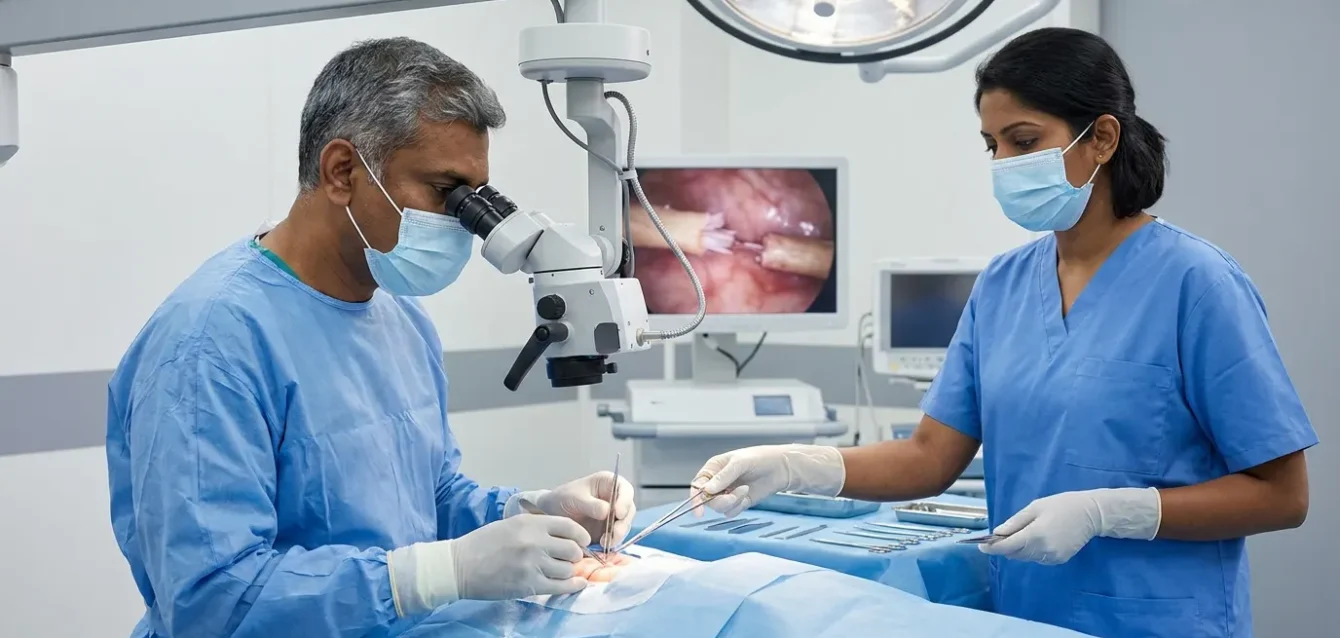
Microsurgery is a specialised surgical technique that uses magnification and fine instruments to operate on very small structures in the body.
Nerves and blood vessels can be extremely delicate. Repairing them requires precision that may not be possible with standard surgical techniques alone.
During microsurgery, surgeons may use an operating microscope or high powered magnification along with specialised instruments and very fine sutures. This allows the damaged structures to be identified and handled with greater accuracy.
For patients looking for microsurgery in Madurai, understanding how this technique works can make the treatment process feel a little less overwhelming.
How Does Nerve Damage Affect the Body?
Nerves carry signals between the brain, spinal cord and different parts of the body.
Some nerves control movement. Others help us feel sensations such as touch, pain and temperature.
When a nerve is damaged, these signals may be disrupted.
Depending on the location and severity of the injury, symptoms may include:
- Numbness or reduced sensation
- Tingling or unusual sensations
- Muscle weakness
- Difficulty moving a body part
- Burning or nerve related pain
- Loss of function in the affected area
Nerve injuries can occur because of accidents, deep cuts, fractures, crush injuries or other forms of trauma.
The type of nerve repair treatment required depends on the nature of the injury.
How Does Microsurgery Help in Nerve Repair?
The main goal of nerve repair surgery is to create the best possible conditions for the damaged nerve to heal and, where possible, allow nerve fibres to regenerate.
Microsurgery helps because it allows the surgeon to work with a very high level of precision.
1. It Helps Identify the Damaged Nerve
After an injury, the damaged nerve may need to be carefully examined to understand the extent of the problem.
The surgeon may assess whether the nerve is stretched, compressed, partially injured or completely divided.
Magnification can help visualise the delicate structures more clearly and support precise surgical planning.
2. It Allows Precise Nerve Repair
If the ends of a damaged nerve can be brought together without excessive tension, they may be carefully repaired.
Microsurgical techniques allow the surgeon to align the nerve ends as accurately as possible using extremely fine sutures.
The aim is to create a pathway that supports the regeneration of nerve fibres.
3. It Can Help When a Nerve Gap Is Present
Sometimes, the damaged ends of a nerve cannot be directly joined together.
This may happen when a section of the nerve has been severely damaged or lost.
Depending on the injury, the surgeon may consider techniques such as nerve grafting or other reconstructive approaches to bridge the gap.
Microsurgical precision is particularly important during these procedures because the structures involved are extremely small and delicate.
4. It May Support Better Functional Recovery
Nerve healing is a slow process.
Even after successful nerve repair surgery, recovery may take weeks, months or sometimes longer. The final outcome can depend on several factors, including:
- The type and severity of the nerve injury
- The location of the injury
- How quickly treatment is provided
- The patient’s age and overall health
- The distance the nerve needs to regenerate
- Rehabilitation after surgery
Microsurgery does not guarantee complete recovery. However, precise repair can help create favourable conditions for nerve regeneration and functional improvement.
When Is Nerve Repair Surgery Considered?
Not every nerve injury requires surgery.
Some nerve injuries may improve with time, observation, medication or rehabilitation. Others may require surgical evaluation, particularly when there is a complete nerve cut, severe injury or a problem that is unlikely to recover without intervention.
A specialist may recommend further evaluation if there is:
- Persistent weakness after an injury
- Loss of sensation
- Difficulty moving a hand, foot or another body part
- A deep cut with possible nerve damage
- A crush or traction injury
- Symptoms that do not improve as expected
Early assessment can be important because delayed treatment may affect the chances of functional recovery in certain types of nerve injuries.
Microsurgery and Peripheral Nerve Repair
Peripheral nerves are the nerves located outside the brain and spinal cord.
These nerves can be injured in different parts of the body, including the arms, hands and legs.
Microsurgical techniques may be used for:
- Direct nerve repair
- Nerve grafting
- Nerve reconstruction
- Repair of associated blood vessels
- Complex injuries involving multiple structures
The exact surgical plan is based on the individual’s injury.
This is why choosing an experienced microsurgery hospital with appropriate surgical expertise and facilities can be an important part of the treatment journey.
What Happens After Nerve Repair Surgery?
Surgery is only one part of recovery.
After the procedure, the repaired area may need protection for a specific period. Depending on the location of the injury, rehabilitation may also play an important role.
Physiotherapy or occupational therapy may be recommended to help maintain movement, prevent stiffness and support functional recovery.
Nerve regeneration also takes time.
A patient may not notice immediate improvement after surgery. Sensation and movement can gradually change as the nerve heals and regenerates.
Regular follow up helps the medical team monitor recovery and guide rehabilitation when required.
Can Microsurgery Restore Normal Nerve Function?
This depends on the individual injury.
Some patients may experience significant improvement in movement or sensation. Others may have partial recovery. In severe nerve injuries, complete restoration of function may not always be possible.
The outcome can depend on how badly the nerve was damaged and how long it remained injured before repair.
The important thing is to have realistic expectations.
Microsurgery is a highly precise technique that can help surgeons repair delicate nerves, but the body’s healing process and the nature of the original injury also play a major role in recovery.
Why Precision Matters in Nerve Repair
Nerves are not simply structures that can be stitched back together without careful planning.
Their size, delicate structure and role in movement and sensation make precision extremely important.
Microsurgery gives surgeons enhanced magnification and specialised tools to perform delicate repairs with greater control.
For patients considering microsurgery in Madurai, the focus should not be on the technology alone. A proper diagnosis, the timing of treatment, the complexity of the injury and the expertise of the surgical team are all equally important.
The Bottom Line
Microsurgery has made it possible to perform highly precise repairs on delicate structures such as nerves.
In selected cases, nerve repair treatment using microsurgical techniques can help reconnect damaged nerves, bridge nerve gaps and support the conditions needed for nerve regeneration.
However, every nerve injury is different.
The right treatment depends on the severity, location and type of nerve damage. A detailed evaluation by a qualified specialist can help determine whether observation, rehabilitation or nerve repair surgery is the most appropriate next step.
At Devadoss Hospital, patients with complex injuries can be evaluated by the appropriate specialists to determine a treatment plan based on their individual condition and recovery needs.
FAQs
What is microsurgery used for in nerve repair?
Microsurgery uses magnification, specialised instruments and fine sutures to repair or reconstruct delicate nerves with greater precision.
How long does nerve recovery take after surgery?
Nerve recovery can take several months or longer. The exact timeline depends on the severity and location of the injury and the individual’s healing process.
Can a completely cut nerve be repaired?
In many cases, a completely divided nerve can be surgically repaired or reconstructed. The appropriate technique depends on the injury and whether the nerve ends can be directly joined.
Is physiotherapy needed after nerve repair surgery?
Rehabilitation may be recommended depending on the location and type of nerve injury. It can help maintain movement and support functional recovery.
When should I see a specialist for a possible nerve injury?
You should seek medical evaluation after a significant injury, particularly if you experience persistent numbness, weakness, loss of movement or reduced sensation
References
-
Peripheral nerve injuries – https://www.mayoclinic.org/diseases-conditions/peripheral-nerve-injuries/diagnosis-treatment/drc-20355632?
-
Surgical Repair of a Nerve – https://www.hopkinsmedicine.org/health/treatment-tests-and-therapies/surgical-repair-nerve?
-
Peripheral nerve repair: innovations and future directions – 2026 Feb – https://link.springer.com/article/10.1186/s12967-025-07567-z?
-
The Present and Future for Peripheral Nerve Regeneration – https://pubmed.ncbi.nlm.nih.gov/27783836/
-
Assessment, management, and rehabilitation of traumatic peripheral nerve injuries for non‐surgeons – 2024 Jun – https://pmc.ncbi.nlm.nih.gov/articles/PMC11998971/?