

Medically reviewed by: Dr. Sathish Devadoss – M.B.B.S., M.S. (Ortho), M.Ch. Orth (UK), FASIF (Aust)
For a person who has suffered a fracture, the first few minutes can make a difference. Whether it happens during a road accident, a fall or a sports injury, knowing what to do before reaching the hospital can help prevent further injury.
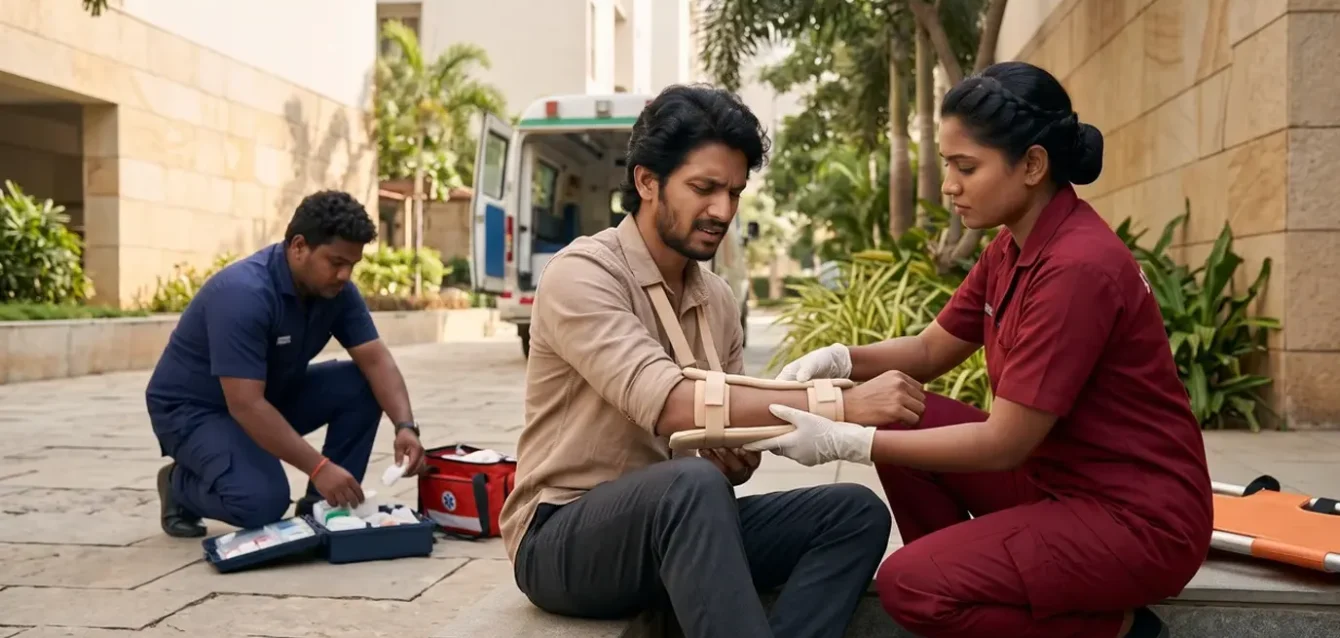
A suspected fracture needs prompt medical attention. Until professional help is available, the priority is to keep the injured person safe, avoid unnecessary movement and protect the injured area.
Let’s look at some important first-aid steps to follow when you suspect a fracture.
How to Recognise a Possible Fracture
A fracture is a break or crack in a bone. It can happen because of a fall, road accident, sports injury or a direct impact.
Some common signs include:
- Severe pain around the injured area.
- Swelling and bruising.
- Difficulty moving or using the affected limb.
- An unusual bend or deformity.
- Numbness or tingling near the injury.
- An open wound, sometimes with bone visible.
Not every fracture looks obvious. A person may still be able to move an injured limb despite having a fracture. An X-ray and medical examination are needed to confirm the injury.
First Aid Steps to Follow Before Reaching the Hospital
Keep the Person Still
Ask the injured person to remain as still and comfortable as possible. Avoid moving the affected limb or asking them to test whether they can walk or move it.
If you suspect an injury to the neck, back, hip or pelvis, do not attempt to reposition the person unless there is immediate danger. Call for emergency medical assistance.
Support the Injured Area
Support the injured limb in the position in which it is found. You can use a cushion, folded clothing or a blanket to provide support and prevent unnecessary movement.
If a limb is visibly deformed, do not try to straighten it. Improper movement can damage nearby nerves, blood vessels and tissues.
Control Any Bleeding
If there is an open wound, cover it with a clean or sterile dressing. If there is bleeding, apply gentle pressure around the wound to control it, avoiding direct pressure on any exposed bone.
Never push a protruding bone back into the wound. Heavy or uncontrolled bleeding requires immediate emergency medical attention.
Apply a Cold Pack
For a closed injury, a cold pack wrapped in a towel can help reduce pain and swelling.
Apply it gently without pressing against the injured area. Never place ice directly on the skin or force the limb into a different position.
Arrange Medical Assistance
Seek medical attention promptly, even if the injury appears minor. If the person has severe pain, an obvious deformity, heavy bleeding or a suspected head, neck or spine injury, call an ambulance rather than attempting to transport them yourself.
Continue supporting the injured area and monitor the person’s condition until medical help arrives.
What Not to Do When Someone Has a Fracture
A few common reactions can unintentionally make the injury worse. Avoid these mistakes:
- Do not straighten the bone: Never try to correct a deformity or push a bone back into place.
- Do not massage the injured area: This can cause additional pain and tissue damage.
- Do not make the person walk: Avoid putting weight on an injured leg or foot.
- Do not apply tight bandages: Tight wrapping can affect blood circulation.
- Do not delay medical attention: Even a fracture without an obvious deformity needs proper evaluation.
When Is It an Emergency?
Some fractures can involve damage to blood vessels, nerves and surrounding tissues. Seek emergency medical help if:
- The bone is visible through the skin.
- There is heavy or uncontrolled bleeding.
- The injured limb becomes pale, blue or unusually cold.
- There is numbness or loss of sensation.
- The injury involves the head, neck, back, hip or pelvis.
- The person becomes unconscious or has difficulty breathing.
- These signs may indicate a serious injury that needs immediate medical attention.
The Right First Aid Can Make a Difference
A fracture needs more than temporary pain relief. Prompt medical attention and careful handling before reaching the hospital can help prevent further injury and support appropriate treatment.
At Devadoss Hospital, fracture care involves proper assessment and treatment based on the type of fracture, its location and the patient condition. Under the guidance of experienced orthopaedic specialists, the focus is on helping patients receive timely care and work towards a safe recovery.
Remember, when a fracture is suspected, keep the injured area supported, avoid unnecessary movement and seek medical help without delay.
Frequently Asked Questions
Can a person move their limb if it is fractured?
Yes. Some people can still move an injured limb despite having a fracture. Movement does not rule out a broken bone. Medical examination and imaging are needed for diagnosis.
Should I use a splint before reaching the hospital?
A splint can help support a suspected fracture and limit movement. However, it should only be applied if you know how to do so safely. Never force the limb into position.
Should I apply ice to a suspected fracture?
A cold pack wrapped in a towel can help reduce pain and swelling in a closed injury. Apply it gently without putting pressure on the injured area.
What should I do if the bone is visible through the skin?
Do not touch or push the exposed bone back. Cover the wound with a clean dressing, control bleeding around it without pressing on the bone and seek emergency medical assistance.
Does every fracture require surgery?
No. Treatment depends on the type, location and severity of the fracture. Some fractures can be treated with casts or braces, while others may require surgical intervention.