

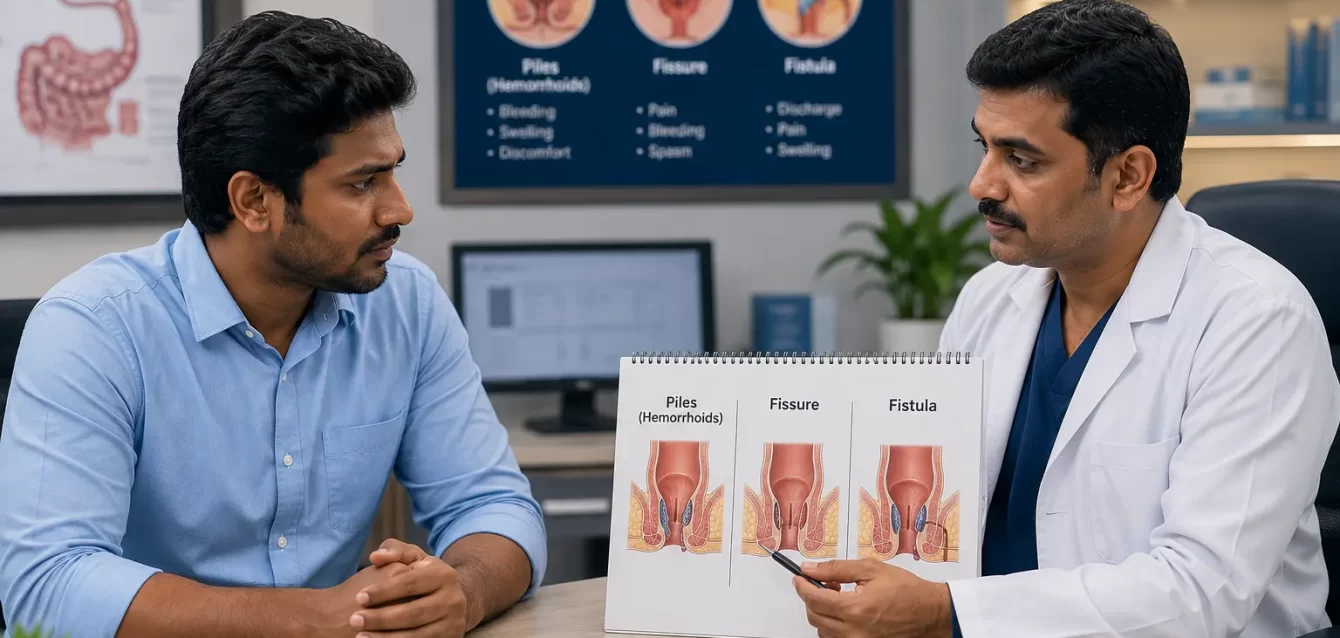
Many people feel uncomfortable talking about pain or discomfort in the rectal area. Because of embarrassment, hesitation, or fear, treatment often gets delayed for weeks or even months. What begins as mild discomfort may slowly progress into severe pain, bleeding, swelling, discharge, or difficulty sitting and carrying out daily activities.
At Devadoss Hospital, doctors frequently meet patients who walk in saying, “I think I have piles.” However, after proper evaluation, many discover that the actual condition is a fissure or fistula. This confusion happens because all three conditions affect the same region and may initially produce similar symptoms.
One of the common reasons patients seek us for Piles Treatment in Madurai is bleeding during bowel movements. However, bleeding alone does not always indicate piles. Several disorders involving the anal region can create overlapping symptoms, which is why understanding the difference becomes important before treatment begins.
Why Patients Commonly Get Confused
One of the biggest misunderstandings doctors frequently observe is that many patients group every rectal problem under one category.
Patients commonly assume:
- Bleeding automatically means piles
- Severe pain means a serious disease
- Temporary symptom relief means complete healing
- Home remedies can permanently solve the condition
- Surgery becomes unavoidable once symptoms begin
Doctors often see patients using over the counter creams for several months because symptoms temporarily reduce. Many also stop treatment midway because they believe reduced pain means the problem has completely disappeared.
In reality, symptom reduction and actual healing are not always the same thing.
For example, internal hemorrhoids may bleed for a long time without creating severe pain because the upper portion of the anal canal contains fewer pain sensitive nerve endings. On the other hand, even a small fissure can create severe pain because sensitive nerve endings become exposed and trigger muscle spasm.
This is one of the reasons patients commonly confuse these conditions.
Quick Comparison: Piles vs Fissure vs Fistula
|
Feature |
Piles (Hemorrhoids) |
Anal Fissure |
Anal Fistula |
|
What it is |
Swollen vascular cushions in the anal canal |
A small tear in the lining of the anus |
An abnormal tunnel between the anal canal and surrounding skin |
|
Common Cause |
Constipation, straining, pregnancy, obesity |
Hard stools, constipation, trauma during bowel movements |
Infection of anal glands leading to abscess formation |
|
Pain |
Usually mild in early stages |
Often severe and sharp |
Variable, usually associated with swelling or infection |
|
Bleeding |
Common, especially during bowel movements |
Small amounts of bleeding may occur |
Usually uncommon |
|
Discharge |
May have mucus discharge in advanced cases |
Rare |
Common pus or fluid discharge |
|
Swelling |
May be present |
Usually not prominent |
Common, especially during infection flare ups |
|
Symptoms After Bowel Movement |
Bleeding, discomfort, prolapse |
Severe pain that may last for hours |
Pain or discharge may persist regardless of bowel movements |
|
Recurrence |
Possible if risk factors continue |
Possible if constipation persists |
Common if the fistula tract remains untreated |
|
Treatment |
Lifestyle changes, medicines, banding, laser or surgery |
Medicines, stool softeners, dietary changes, selected procedures |
Usually requires definitive treatment of the fistula tract |
What Are Piles?
Piles, also called hemorrhoids, are not simply swollen veins as many people assume. The anal canal naturally contains vascular cushions that help support bowel control and maintain continence. Problems begin when repeated pressure gradually weakens the supporting tissues around these structures.
Contributing factors may include:
- Repeated constipation
- Excessive straining during bowel movements
- Long sitting hours
- Obesity
- Pregnancy
- Low fiber intake
- Poor hydration
- Heavy lifting and repeated abdominal strain
How Symptoms Progress in Piles
Many patients ignore early Hemorrhoids Symptoms because symptoms often begin very mildly.
Early stage
- Mild itching
- Small spots of blood on tissue paper
- Slight discomfort during bowel movements
Early internal hemorrhoids frequently create little or no pain because the upper anal canal contains fewer pain sensitive nerve endings.
Progression
Repeated straining increases pressure within rectal blood vessels and supporting tissues. Over time, connective tissue weakens and hemorrhoidal cushions begin descending downward.
Patients may gradually experience:
- Persistent bleeding
- Swelling sensation
- Mucus discharge
- Feeling of incomplete bowel emptying
- Tissue protruding during bowel movements
Advanced stage
- Persistent prolapse
- Increased inflammation
- Pain while sitting
- Difficulty maintaining hygiene
- Sudden severe pain if thrombosis develops
Thrombosis occurs when blood clots form within hemorrhoidal tissue and may create sudden severe pain.
What Is an Anal Fissure?
An anal fissure is a small tear in the lining of the anus. Although the injury itself may appear small, the biological changes surrounding it can create severe discomfort.
Patients seeking Anal Fissure Treatment in Madurai commonly describe the sensation as a sharp cut or tearing feeling while passing stools.
How Symptoms Progress in Anal Fissure
Early stage
- Mild pain during bowel movements
- Small amounts of bleeding
- Temporary burning sensation
Progression
Unlike piles, fissures frequently become painful because the tear can expose sensitive nerve endings beneath the surface lining.
The body may respond by creating internal anal sphincter muscle spasm.
This creates a cycle:
Pain during bowel movement → muscle spasm → reduced blood supply → slower healing → repeated pain
Patients may gradually experience:
- Severe burning pain
- Pain continuing for hours after bowel movements
- Fear of using the toilet
- Stool withholding behavior
- Worsening constipation
Advanced stage
Long standing fissures may develop:
- Chronic scar tissue
- Sentinel skin tags
- Persistent muscle spasm
- Delayed healing
What Is an Anal Fistula?
An anal fistula is an abnormal tunnel that forms between the anal canal and surrounding skin.
Many fistulas begin after small anal glands become blocked.
The process often follows this sequence:
Blocked gland → infection → abscess formation → pressure buildup → abnormal tunnel formation
Patients seeking Anal Fistula Treatment in Madurai frequently describe symptoms that disappear and return repeatedly.
How Symptoms Progress in Fistula
Early stage
- Painful swelling
- Redness
- Local discomfort
Progression
- Recurrent swelling
- Pus discharge
- Skin irritation
- Temporary symptom improvement followed by recurrence
Many patients incorrectly assume healing has occurred because symptoms disappear temporarily.
Doctors frequently explain that symptom reduction does not necessarily mean the fistula tract itself has closed.
Advanced stage
- Recurrent abscess formation
- Multiple branching tracts
- Persistent infection cycles
- Greater discomfort during daily activity
Lifestyle Triggers Doctors Frequently Notice
Many patients focus only on medicines and forget that daily habits often play a major role.
Long sitting hours
Continuous sitting may increase pressure around pelvic blood vessels and contribute to venous congestion.
Low fiber diet
Fiber absorbs water and increases stool bulk. Reduced fiber intake may create harder stools requiring greater straining.
Poor hydration
Reduced water intake can contribute to dry stool consistency and constipation.
Delaying bowel movements
Repeatedly ignoring bowel urges allows additional water absorption in the colon, creating harder stools.
Sedentary lifestyle
Reduced physical activity may slow bowel movement patterns.
Obesity
Increased abdominal pressure may increase pressure within pelvic structures.
Excessive gym straining and heavy lifting
Repeated forceful abdominal pressure may stress supporting tissues around the rectal region.
Understanding Rectal Pain Causes becomes easier when symptoms and lifestyle patterns are considered together.
What Happens If Treatment Gets Delayed?
Many patients postpone treatment because symptoms temporarily reduce.
However, delayed treatment may create additional complications.
Piles
- Persistent bleeding contributing to iron deficiency anemia
- Increased swelling
- Permanent prolapse
- Greater discomfort
Fissures
- Chronic scar formation
- Long term pain cycles
- Sentinel skin tag development
- Delayed healing
Fistulas
- Recurrent infections
- Multiple branching tracts
- Repeated abscess formation
- Persistent discharge
Since these conditions fall under Colorectal Disorders, doctors usually recommend proper evaluation rather than self-diagnosis.
Modern Treatment Approaches Today
Treatment depends entirely on diagnosis and severity.
The right Proctology Treatment begins with identifying the actual condition.
Mild cases may improve with:
- Diet correction
- Hydration
- Medicines
- Stool softeners
- Lifestyle modification
Advanced approaches may include:
Rubber band ligation
Small bands reduce blood supply to hemorrhoidal tissue and gradually shrink it.
Laser procedures
Laser energy targets specific tissue while minimizing injury to surrounding structures.
Botulinum therapy
Botulinum based treatment may help relax muscle spasm and improve blood supply in selected fissure cases.
Sphincter preserving procedures
Some advanced fistula procedures focus on treating disease while protecting bowel control function.
Minimally invasive techniques
Selected patients may benefit from approaches designed to reduce tissue trauma.
Recovery Expectations: Traditional Surgery
Many patients still imagine surgery based on older experiences.
Traditional surgical approaches may sometimes involve:
- Larger wounds in selected procedures
- Greater tissue handling
- Increased postoperative discomfort
- Longer recovery duration
- Longer time before returning to routine activity
Recovery Expectations: Robotic and Advanced Surgical Approaches
Modern treatment methods have evolved significantly.
Depending on disease severity and patient suitability, specialists may consider minimally invasive or robotic assisted procedures.
Potential advantages may include:
- Better visualization
- Greater precision
- Reduced surrounding tissue disruption
- Reduced postoperative discomfort in selected cases
- Shorter hospital stay in some patients
- Earlier return to daily activities
Recovery may also vary according to the condition itself.
Piles patient undergoing minimally invasive procedures may often return to work earlier.
Fissure recovery frequently depends on severity and treatment timing.
Fistula recovery often depends on tract complexity and depth.
Doctors also explain that technology alone does not determine outcomes. Selecting the appropriate treatment based on the patient’s condition remains equally important.
Why Proper Diagnosis Matters
Self-diagnosis remains one of the biggest mistakes patients make.
Pain, bleeding, swelling, or discharge should not automatically be labeled as piles.
Early diagnosis often means:
- Faster recovery
- Reduced discomfort
- Better treatment choices
- Fewer complications
At Devadoss Hospital, specialists focus on identifying the actual cause before planning treatment. Pain in this area may feel uncomfortable to discuss, but delaying treatment often creates larger problems than the condition itself.
FAQs
1. How do I know whether I have piles or fissure?
Piles commonly involve swelling and bleeding, while fissures often create sharp pain during bowel movements. A proper medical evaluation helps confirm the exact condition.
2. Can piles become fistula?
No. These are different conditions with different causes and treatment approaches.
3. Is surgery always necessary?
Not always. Mild cases may improve with medicines and lifestyle changes.
4. What is the Best Treatment for Piles?
TheBest Treatment for Piles depends on disease severity and individual patient assessment.
5. Is fistula dangerous if untreated?
Untreated fistulas may lead to repeated infections and recurrent symptoms.
6. Can fissures heal naturally?
Many early fissures improve with medical treatment and proper bowel habit correction
7. When should I see a doctor?
Persistent pain, bleeding, swelling, or discharge should be evaluated early.