

Medically reviewed by: Dr. Sathish Devadoss – M.B.B.S., M.S. (Ortho), M.Ch. Orth (UK), FASIF (Aust)
Knee replacement surgery has come a long way, and robotic assistance is one of the newer developments in the field. But does robotic surgery always mean better results? Not necessarily. Both robotic assisted and conventional knee replacement aim to relieve pain, improve movement and help people get back to their daily activities.
The main difference lies in how the surgeon plans and performs the procedure. Understanding this can help patients have a more informed discussion with their orthopaedic specialist.
What Is Conventional Knee Replacement?
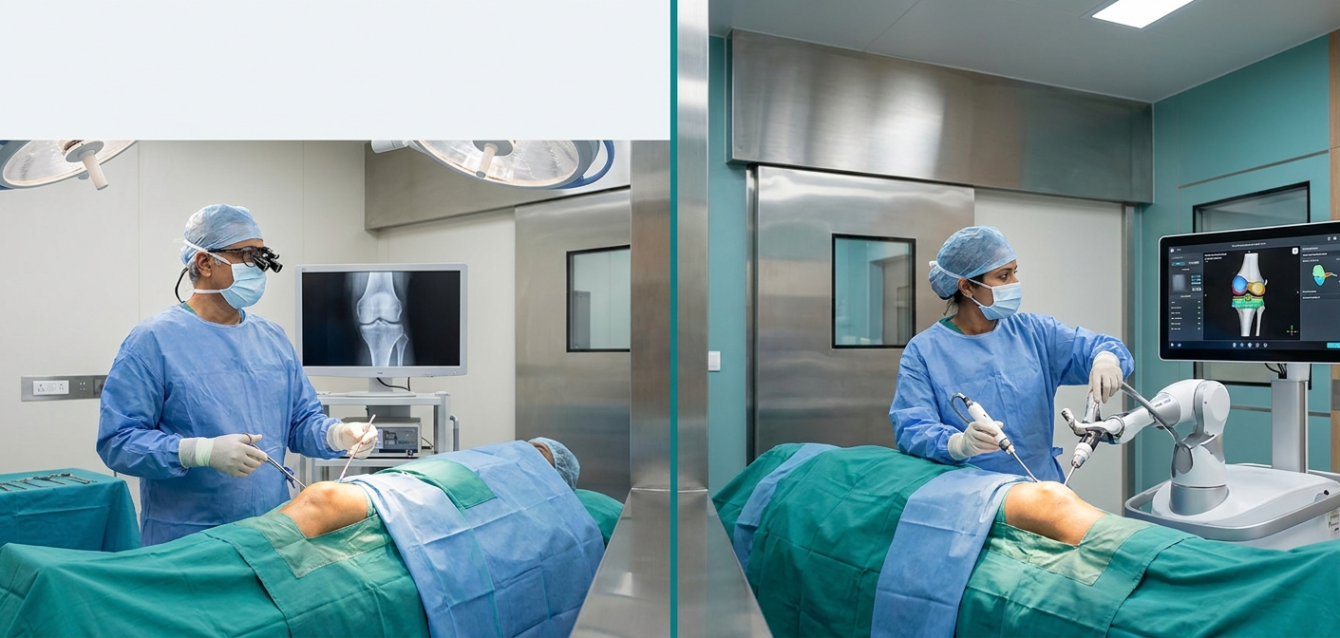
In conventional knee replacement, the surgeon removes damaged cartilage and bone from the knee joint and replaces them with artificial components. Surgical instruments and preoperative scans or X-rays help the surgeon plan the procedure and position the implants.
The aim is to reduce pain caused by conditions such as advanced osteoarthritis, especially when medicines, physiotherapy and other non-surgical treatments no longer provide enough relief.
Conventional knee replacement has been performed for many years and remains an established treatment option for suitable patients.
What Is Robotic Assisted Knee Replacement?
In robotic assisted knee replacement, the surgeon uses a robotic-assisted system to help plan the procedure and guide bone preparation and implant positioning.
The process may involve creating a detailed plan based on the patient’s knee anatomy. During surgery, the system provides information and guidance that can help the surgeon make adjustments according to the treatment plan.
One important thing to understand is that the robot does not perform the operation independently. The surgeon remains in control and makes the clinical decisions throughout the procedure.
Robotic Knee Replacement vs Conventional: Key Differences
Both procedures aim to replace damaged parts of the knee joint. The main differences lie in surgical planning and the tools used to guide the surgeon.
- Surgical planning: Conventional surgery uses clinical assessments and X-rays, while robotic-assisted surgery may use detailed digital planning based on the patient’s knee anatomy.
- Surgical guidance: Conventional surgery relies on the surgeon’s experience and standard instruments. Robotic-assisted surgery adds robotic guidance and real-time information, depending on the system.
- Implant positioning: Conventional techniques are used to position the implant in traditional surgery. Robotic assistance may improve the accuracy of alignment and positioning.
- Surgeon’s role: In both procedures, the surgeon performs and controls the operation. The robotic system provides assistance but does not operate independently.
- Suitability: The right approach depends on the patient’s knee condition, overall health, the surgeon’s assessment and the technology available.
Neither approach is automatically the best choice for everyone.
What Are the Benefits of Robotic Knee Replacement?
The main advantage is the additional guidance available to the surgeon during planning and bone preparation. Depending on the robotic system used, this may help with:
- More accurate implant alignment: Robotic guidance can help the surgeon position the implant according to the planned alignment.
- Personalised surgical planning: The plan can account for the patient’s individual knee anatomy.
- Intraoperative adjustments: Some systems provide information that helps the surgeon assess and adjust the surgical plan during the procedure.
These are potential robotic knee replacement benefits, but they do not guarantee less pain, faster recovery or a longer-lasting implant. The outcome also depends on the patient’s condition, the surgical technique and rehabilitation after surgery.
Does Robotic Surgery Offer Better Results?
Research suggests that robotic assistance can improve the accuracy of implant alignment. However, better alignment does not automatically translate into better pain relief or knee function for every patient.
A systematic review published in 2024, which analysed seven randomised controlled trials involving 1,942 knees, found better postoperative alignment with robotic surgery. However, clinical outcomes, functional results and complication rates were broadly similar between robotic and conventional procedures.
A later systematic review published in 2025, analysing 21 randomised controlled trials, also found improved alignment accuracy with robotic assistance, while differences in several patient-reported functional outcomes were not statistically significant.
So, when comparing robotic knee replacement vs conventional surgery, it is important to look beyond the technology itself. Both methods can provide good results when the procedure is appropriately selected and performed by an experienced surgeon.
Is Robotic Knee Replacement Suitable for Everyone?
Not necessarily. The choice depends on several factors, including:
- The severity of arthritis and joint damage
- The shape and alignment of the knee
- The patient’s age, general health and activity level
- The surgeon’s experience and the technology available
- The expected benefits, costs and possible risks
A consultation helps the surgeon assess whether robotic assisted knee replacement is appropriate for the patient’s specific needs or whether conventional surgery is the better option.
What Is Recovery Like After Knee Replacement?
Recovery involves more than the operation itself. Patients generally need pain management, guided exercises and physiotherapy to regain knee movement, strength and confidence while walking.
The recovery period varies from person to person. It can depend on general health, muscle strength, the condition of the knee before surgery and how consistently rehabilitation is followed.
Robotic assistance does not eliminate the need for rehabilitation. Patients should follow their surgeon’s instructions and attend follow-up appointments to monitor healing and progress.
Exploring Robotic Knee Replacement in Madurai
If you are considering robotic knee replacement in Madurai, start with an orthopaedic assessment rather than choosing a procedure based on technology alone. At Devadoss Hospital, patients can discuss their knee condition, available surgical options and the factors that may influence their treatment decision with the orthopaedic team.
Those looking into robotic knee surgery in Madurai should also ask about the surgeon’s experience, the robotic system being used, expected recovery, potential risks and the overall cost. These details can help patients make a decision based on their individual needs.
Frequently Asked Questions
Is robotic knee replacement better than conventional surgery?
Robotic assistance can improve implant alignment accuracy, but research has not consistently shown better functional outcomes or fewer complications. The most suitable option depends on the patient and the surgeon’s assessment.
Does a robot perform the knee replacement surgery?
No. The surgeon controls the operation and makes the clinical decisions. The robotic system provides planning support and surgical guidance.
Does robotic knee replacement mean faster recovery?
Not necessarily. Recovery depends on several factors, including the patient’s health, the surgery and their rehabilitation. Robotic assistance alone does not guarantee a faster recovery.
Is robotic knee replacement more expensive?
It may cost more because of the technology, equipment and associated planning requirements. The actual cost varies by hospital and surgical system.
How do I know which procedure is right for me?
An orthopaedic surgeon can assess your X-rays, symptoms, mobility and overall health before recommending a suitable approach. Ask about the expected benefits, risks, costs and rehabilitation requirements of each option.